
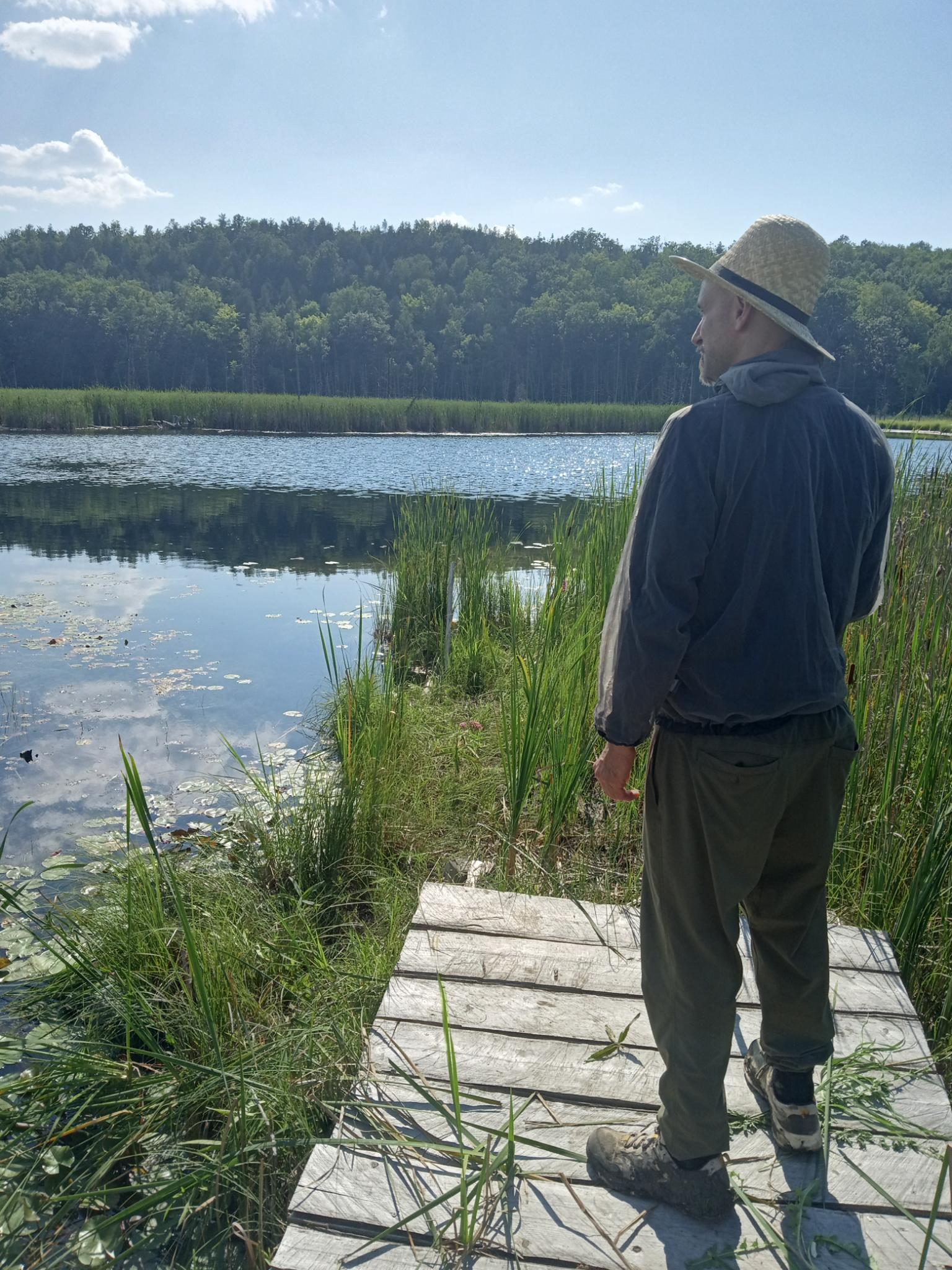
Jude Shore is a certified sex and porn addiction recovery coach, and a licensed philosophical counsellor.
He holds degrees in philosophy and law, and has trained in family mediation and mindfulness-based therapies.
He has more than 10 years experience facilitating and participating in group work focused on addiction, meditation, philosophy, and men's issues.
He started After Vice after recovering from more than 20 years of a porn habit.
It was exciting, obviously. And it was an outlet for my otherwise uncontrollable teenage lust. And because I was quite shy and anxious about real-life sexual opportunities, porn also became, so it seemed, a safe and reliable way to manage my sexual frustration.
It seemed to make me feel better and more capable to deal with temptations and disappointments.
In those days, internet porn was new, and nobody ever talked about it being a potential problem. If anything, everything in our culture seemed to promote watching porn.
Mass media was already filled with sexual imagery, jokes, and stories. It endlessly promotes sexual liberation, sexual exploration, and the pursuit of pleasure.
On top of that, the mental health industry claims that masturbation and porn are important parts of "healthy sexuality", and that they're useful tools for managing depression and anxiety. To oppose masturbation and porn is to be irrational, immature, anti-scientific, or anti-feminist.
Even the self-help books say that watching porn is only a problem to the extent that it causes other problems (e.g. relational, medical, financial, legal, professional). And since that wasn't the case for me, I could see no problem with watching porn.
Still, in my early 20s, I started to get the sense that my porn habit might be a problem. I had been seeing a therapist for a few months (who now works in a clinical psychology program to train new therapists), and I liked him, and I trusted his judgment. So I raised my concern.
"I think I might be watching too much porn." He replied, "Is it causing any problems for you?" I said, "I don't know." "Well," he concluded, "if it was too much, it would be causing problems." And that was the end of that discussion. I felt reassured.
But what his "sex-positive" perspective failed to appreciate was what I only learned years later: that the problems caused by an out-of-control porn habit can be so devastating and difficult to overcome that the best solution is actually to prevent the habit from ever getting to that point. And that's what, intuitively, I was trying to do.
I don't think watching porn is exactly like a drug addiction, but it can undoubtedly become a deeply engrained habit that can feel unavoidable and impossible to stop. And that's how it was starting to feel for me.
But, like a drug, our brains become accustomed to the reward offered by porn, and so the habit tends to escalate--in the case of porn, by increasing the stimulation through more extreme images, more risk, and simply more time and money spent on more content.
Still, many people are, it seems, able to watch porn without the habit escalating to a dangerous point. It was easy enough to believe that about myself. My therapist had re-affirmed that attitude. The risk of a serious potential future problem was not convincing enough for me to try to quit.
And then, when the problems did finally start to materialize--erectile dysfunction, wasted money, loss of sleep, obsessive thoughts, interference with my relationships and my education--I felt like I could not quit. I had a strong sex drive, and I needed it.
Even though I now had obvious evidence that this habit was self-destructive, it felt too deeply engrained in my life to be able to stop. This was where, since puberty, I had found comfort, and relief, and pleasure. Was I supposed to live without that? Where would I turn instead?
I had studied philosophy in university, and I was always interested in the ancient question of what it means to live a good life. I let myself become convinced that the answer was pleasure.
And this hedonistic belief guided other areas of my life too; I was also stuck in very bad eating habits and a serious dependence on marijuana. And so as the real consequences of these habits--porn, junk food, weed--all started to become sufficiently serious and undeniable, I realized I had no choice but to make a dramatic change.
First, I re-examined my beliefs. I came to see the problems with hedonism, both philosophically and psychologically. I started to prioritize autonomy and self-control. I came to reject my position of dependence on technology and women. I came to see porn as a tool of control and docility.
Second, I fixed my habits. I quit smoking weed. I started to exercise and eat healthfully. I started to prioritize sleep and physical relaxation. Improving my health made me feel better, both physically and mentally, which made the comfort that porn previously offered feel less important.
Third, I started to re-focus my life on what really mattered to me. I had felt, for years, that my life was focused on pursuing goals I didn't really care about, either because of habit, social pressure, or fear. So I became honest with myself about what I wanted in my life and I started working towards it.
Ironically, I didn't even try to quit porn. I made three drastic changes--to my beliefs, my habits, and my values--and both my desire to watch porn, and my habit of watching it, disappeared.
I've spoken to many men who have struggled to quit porn, feeling unable to resist the temptation. And when I discovered that the way to quit is not by resisting, but rather by addressing the underlying cause of the temptation, I decided I wanted to help other men quit as easily as I did. And that's why I started After Vice.
After Vice is a discreet and confidential coaching service for men struggling with pornography.
Whether your goal is to reduce, change, or eliminate your porn use,
we are here to help you develop the habits and attitudes to be successful.
This isn't therapy. Our role is not to diagnose you as disordered or medicalize you as an addict.
This isn't ideology. Our role is not to judge you or condemn you as evil, abusive, or toxic.
After Vice offers a unique blend of coaching and philosophical counselling
to help you create lasting changes in your life.
We focus on:
1) developing new, healthy habits to re-direct the energy and emotions that drive your desire to watch porn;
2) developing new attitudes and perspectives to help you overcome the desire to watch porn
and to shift your focus to more meaningful and satisfying pursuits.
Unlike typical porn addiction coaching, After Vice doesn't require you to become religious,
pursue a long-term relationship, or struggle to resist the temptations of porn.
To learn more about our approach, read our answers to some frequently asked questions.